
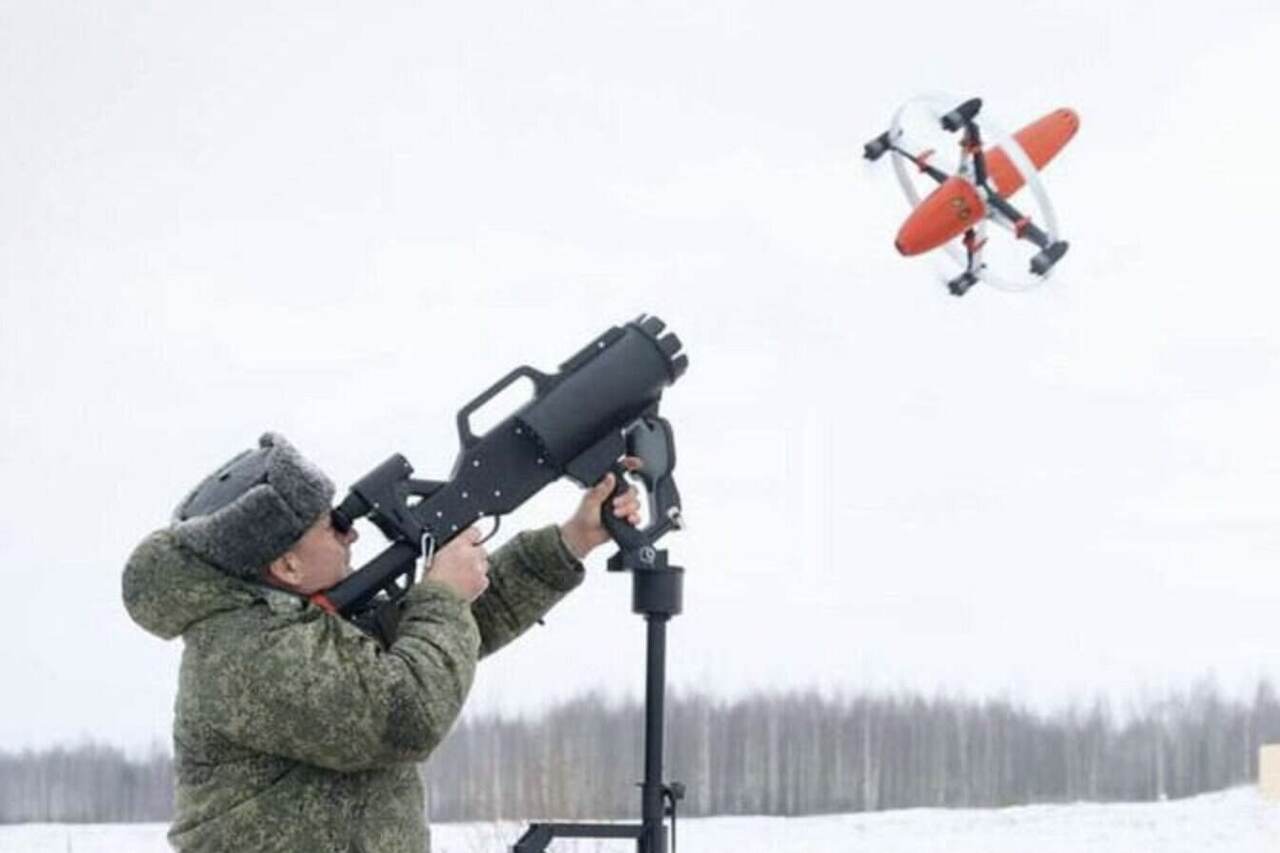
The Armed Forces of Belarus tested the Russian drone interceptor Molot, which is launched from a handheld launcher.
According to the Ukrainian portal Militarnyi, the tests took place in early February and involved 59 different systems to counter drones, said a representative of the country’s Ministry of Defence.
The tests included detection, suppression, and destruction systems. “More than 80% of the systems presented in the experiment are Belarusian-made,” said the Ministry of Defence. A highlight of the tests was the Russian system Molot from Nova Labs.
The Molot consists of two main components: a reusable launcher and an interceptor drone. The launcher has the shape of a tube closed at the rear, with two external handles, a stock, and a sight.
In combat position with the UAV installed, its length does not exceed 700–800 mm, and its weight is at most 2 kg. The system imposes no special requirements on the user.
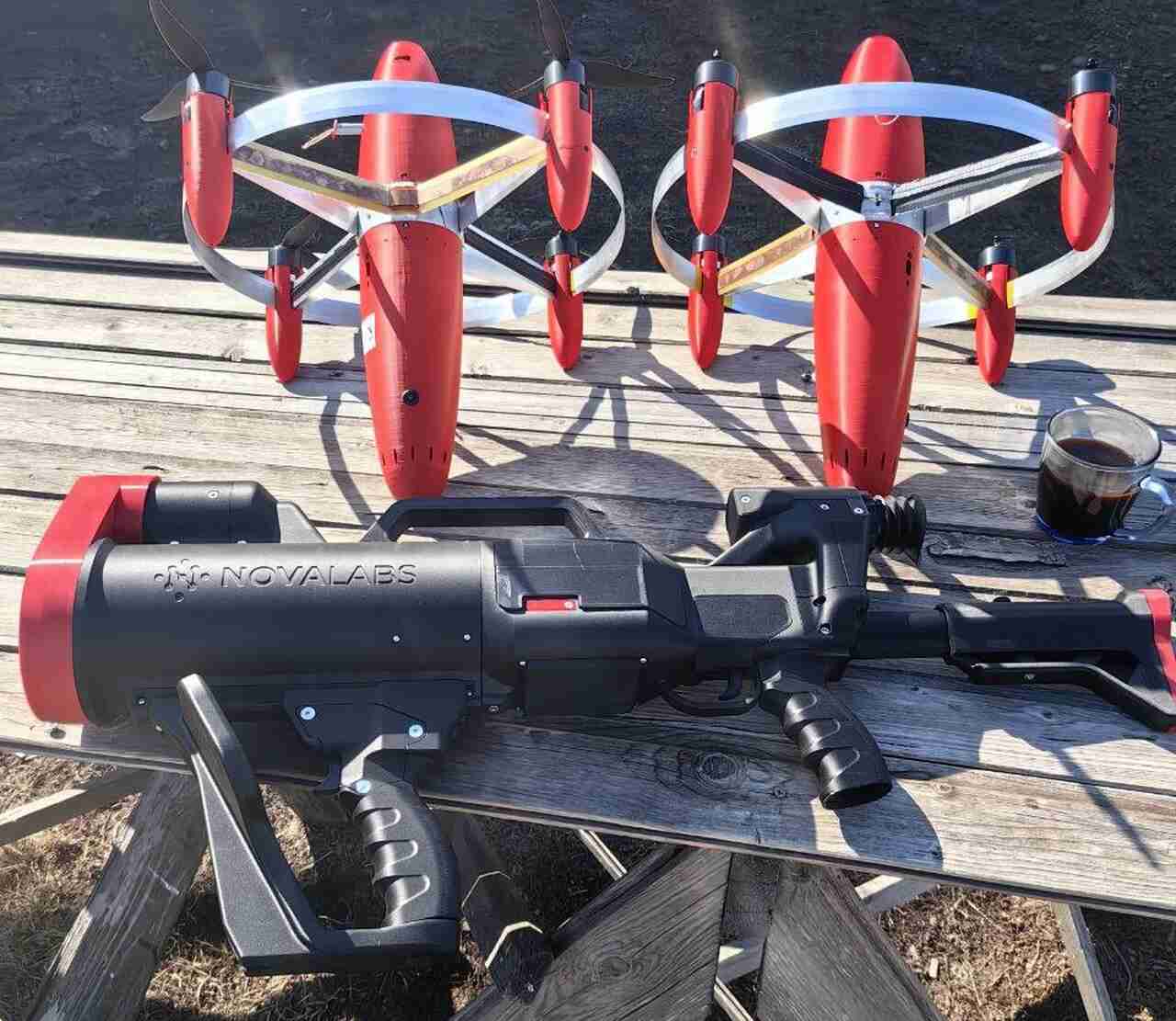
Inside are a guidance system, control devices, a warhead, and a battery. Four electric motors with propellers provide flight, and the UAV is capable of vertical takeoff, hovering, and horizontal flight.
In flight, the device reaches speeds of up to 50 m/s. The combat range depends on the type of target: when operating against large aircraft-type drones, it reaches up to 1 km.
Interception of drones with diameters of 500 to 700 mm is possible at a distance of 350 to 400 m, and the operational altitude reaches 200 m.
The drone is equipped with an infrared location system capable of independently tracking the target. The project claims to implement a “fire-and-forget” principle.
Nova Labs designed it in two versions: portable and fixed. The portable version has a thermal imaging search system and 100 mm kinetic ammunition with speeds of up to 265 km/h.
The stationary version is equipped with a radio or laser guidance system, has a range of up to 3.5 km, and the projectile speed reaches 360 km/h.
Photos: Belarusian Ministry of Defence / Nova Labs. This content was created with the help of AI and reviewed by the editorial team.
